🧠 The AI that actually remembers you
A new paper builds memory directly into the model instead of bolting notes on the side. We explain Metis in plain words, plus the week's research news.

A 5-minute read.
We spent the week with a paper that pokes at the most human flaw in AI: a model can dazzle you on Tuesday and forget you exist on Wednesday. A Shanghai team thinks the fix isn't a bigger notebook — it's a different kind of brain.
📄 The Paper: Metis, a model with memory built in
The paper is "Metis: Memory Foundation Model" from MemTensor, a Shanghai startup, with co-authors at Renmin University, the National University of Singapore, Shanghai Jiao Tong and Tongji. The question it asks: what would it take for a language model to remember things natively — inside the model itself — rather than through notes bolted on from outside?
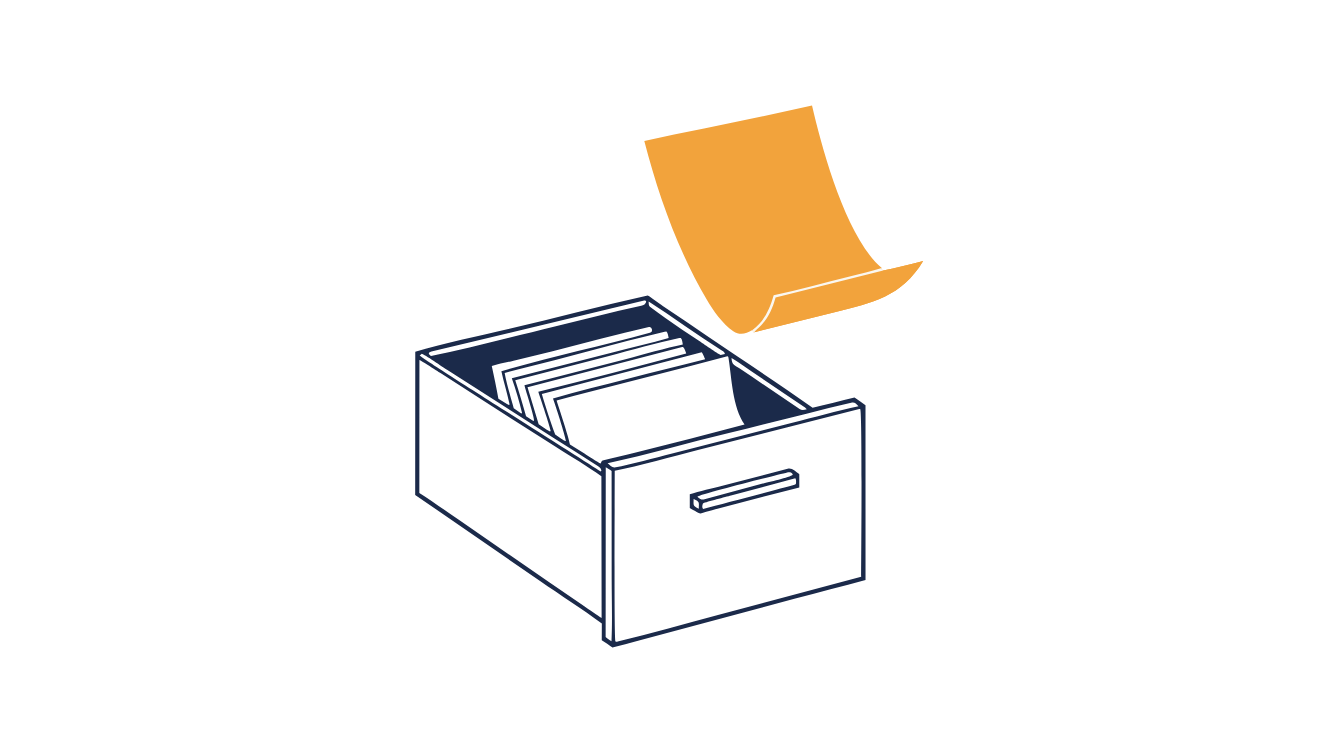
Because that's how today's "memory" features actually work. The model writes facts to an external database, then pastes relevant snippets back into its prompt next time. Picture a brilliant colleague with amnesia and an excellent filing cabinet: every morning they re-read your file, and every morning they are meeting you for the first time. It works, sort of. It is not remembering.
Metis takes the other road. It gives the model a persistent memory state that lives inside the network and evolves as you interact with it, read through a mechanism the authors call memory attention. Updating that memory needs only a forward pass — a normal read-through of the model, no retraining, no gradient math — while the model's actual weights stay frozen. The team trained four distinct memory skills: remember, update, forget, and reflect (the model reorganizing what it knows, unprompted).
Why we care: the gap between "assistant with a filing cabinet" and "colleague who knows you" is arguably the biggest product gap in AI right now — it's what long-running agents, personal tutors and real assistants are all waiting on. We should be honest, though: the results here are early, and the absolute scores are low. We're genuinely not sure native memory beats a really good filing cabinet yet — if you read it differently, correct us.
Go deeper ▾Built on frozen Qwen3.5 backbones at 4B, 9B and 27B parameters; only the memory-specific parameters are trained, on 8×H100 GPUs.Training data: roughly 406M tokens (~357k samples) synthesized from 27 public benchmarks, covering the four memory operations, plus ~609k auxiliary samples for multi-fact and "pollution" scenarios (misleading or irrelevant updates the model should resist).Numbers: on the MemOps benchmark with no context provided, Metis-27B averages 24.76% across operations versus 9.70% for a Temp-LoRA baseline; with gold context on LoCoMo QA it reaches 73.77%. Yes, 24.76% is the good score — that's how unsolved this problem is.Stated limitations: information loss when long histories get compressed into a fixed-size state, and occasional "information confusion" as semantics blend together in latent space.Paper · Code and weights (non-commercial license).
🗞️ The Digest
- OpenAI says its unreleased Astra model solved ten open math problems — each unsolved for a decade or more, including the first construction of a non-sofic group (open since 1999) — publishing machine-checkable Lean proofs for roughly $2,000 in compute (failed attempts not counted). Not yet peer reviewed, and mathematicians note formal verification checks the logic, not whether the formalization matches the original question. DataCamp
- Alibaba published the Qwen-UI-Agent technical report, a foundation agent that operates phone, desktop and web interfaces, claiming state of the art on mobile-agent benchmarks (82.1% on MobileWorld, 79.5% on OSWorld-Verified). Computer-use agents are quietly becoming a benchmark race of their own. arXiv
- The EU AI Act's remaining obligations kicked in on 2 August, including the high-risk system rules — which now shape how any lab, American or Asian, ships models and AI products into Europe. Implementation timeline
- Research money keeps moving east: Asia-based startups raised $42.8 billion in Q2 2026, the highest quarterly total in over three years — and more than 60% of it went to AI. Crunchbase News
💡 Concept, plainly
Context window. A model's context window is its working memory: everything it can "see" in the current conversation, wiped clean when the session ends. It's why your assistant forgets you between chats — and why memory research like today's paper exists at all.
Does the filing-cabinet analogy hold up, or did we flatten how memory attention really works? Hit reply and tell us — we read everything.
— The Editorial Team